

KFSH Documents World’s First Case of Seven Cardiac Procedures Performed in a Single Robotic Surgical Approach
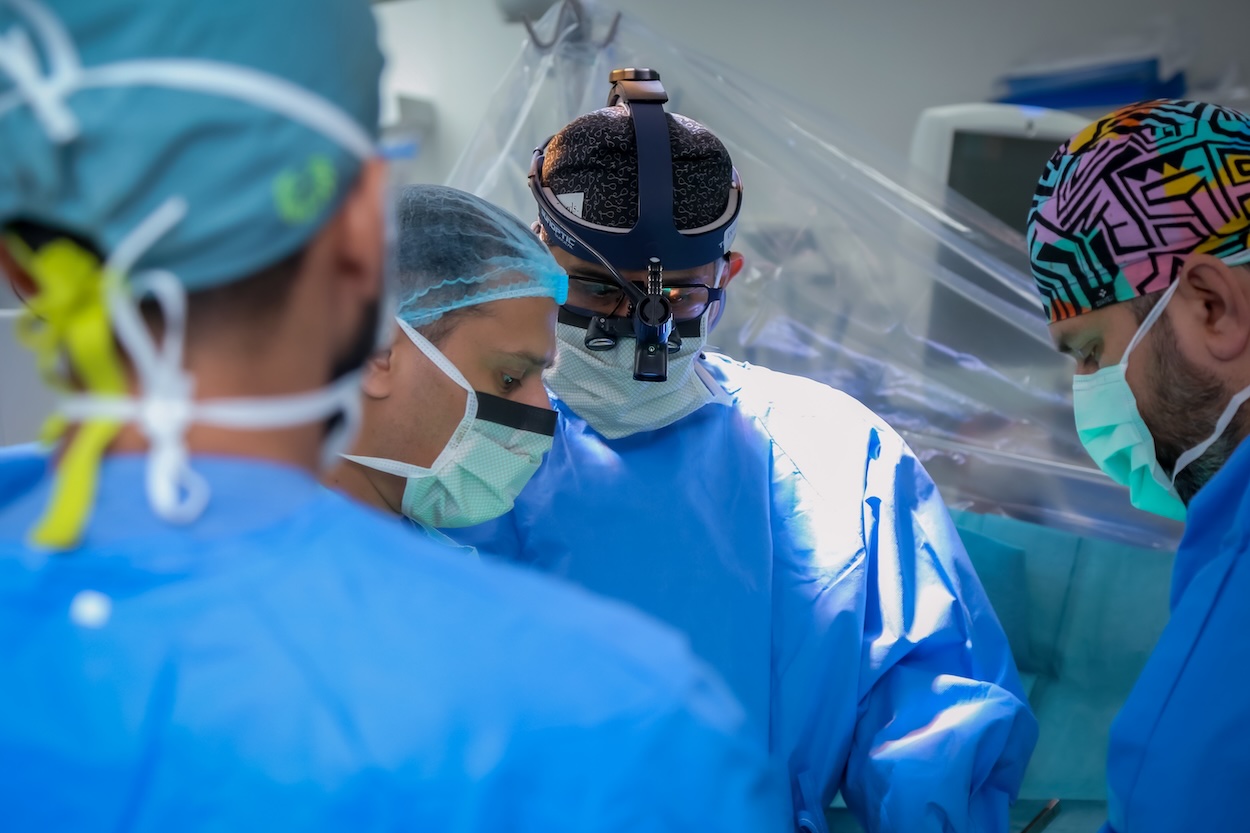
The innovative approach stabilized the patient’s condition, accelerated her recovery, and spared her from undergoing multiple staged surgeries that would have significantly increased risks and prolonged her suffering.
Unlike conventional open-heart surgery, the procedure was performed without a full chest incision. The robotic technique enabled the team to carry out mitral valve replacement, tricuspid valve repair, arrhythmia treatment using a Maze procedure, left atrial appendage closure, atrial septal defect formation, and reconstruction of complex venous anatomy (double patch venous enlargement), all through small, precise incisions. This minimally invasive approach reduced surgical trauma, lowered the likelihood of complications, supported a safer procedure, full restoration of heart function and earlier hospital discharge within 8 days.
The significance of the case lies in its integration of two surgical domains that are typically managed separately: adult acquired heart disease and congenital defect repair. Treating a heart affected simultaneously by acquired pathology and structural congenital abnormalities required dual expertise and the ability to unify different treatment standards within a single, carefully coordinated intervention.
Robotic technology played a central role in the procedure’s success, offering enhanced precision when navigating delicate intracardiac structures and allowing multiple complex interventions to be performed through limited access points. This improved surgical control, minimized bleeding, and reduced the risks commonly associated with traditional open-heart surgery.
This milestone reflects KFSH’s commitment to advancing the boundaries of cardiac surgery through cutting-edge technology and integrated multidisciplinary care. It underscores the hospital’s patient-centered approach, prioritizing safety, clinical excellence, and measurable outcomes, while reinforcing its position as a global reference center for complex surgical innovation.
King Faisal Specialist Hospital has been ranked first in the Middle East and North Africa and 12th globally among the world’s top 250 Academic Medical Centers for 2026 and recognized as the most valuable healthcare brand in the Kingdom and the Middle East according to Brand Finance 2025. It has also been listed by Newsweek among the World’s Best Hospitals 2025, the World’s Best Smart Hospitals 2026, and the World’s Best Specialized Hospitals 2026.
Saudi Hospital
KFSH
email us here
Legal Disclaimer:
EIN Presswire provides this news content "as is" without warranty of any kind. We do not accept any responsibility or liability for the accuracy, content, images, videos, licenses, completeness, legality, or reliability of the information contained in this article. If you have any complaints or copyright issues related to this article, kindly contact the author above.
